
Method
Is your teen’s hard work in their STEM, IB or AP Math and Science courses being rewarded with top marks? Are they sitting near the top of their cohort? Then, the English essay and test scores come in, and they are lower and do not match their other marks the transcript!
If this sounds familiar, you’re experiencing the same frustration that many teens and parents do. So, let me reassure you that the lower marks in English aren’t the result of your teen not being an innately STRONG writer or not being the LITERARY TYPE.
Something is missing from how English is taught, and it has a name.
So what happens between the "great student" and the "mediocre English grade"?
By 11th and 12th grade, teachers expect students to think and write critically about fiction and non-fiction, and universities demand it; however, most high school classrooms only teach one half of that skill. They teach writing structure.
Here is the part parents rarely hear explained plainly: most University Undergraduate and Teacher Preparation Programs never show or train future teachers how to teach academic writing or literary, rhetorical, or critical analysis. That means most high school English teachers are never trained to teach analysis or academic writing; they usually cannot demonstrate analysis or writing, step by step, in front of a class the same way Math teachers can demonstrate a complex problem. .
So, classrooms default to what can be taught without that specialized training: essay structure. The five-paragraph format. The topic sentence. The "hamburger"or “key-hole” essay. Structure is teachable without deep training in literary theory. Analysis is not.
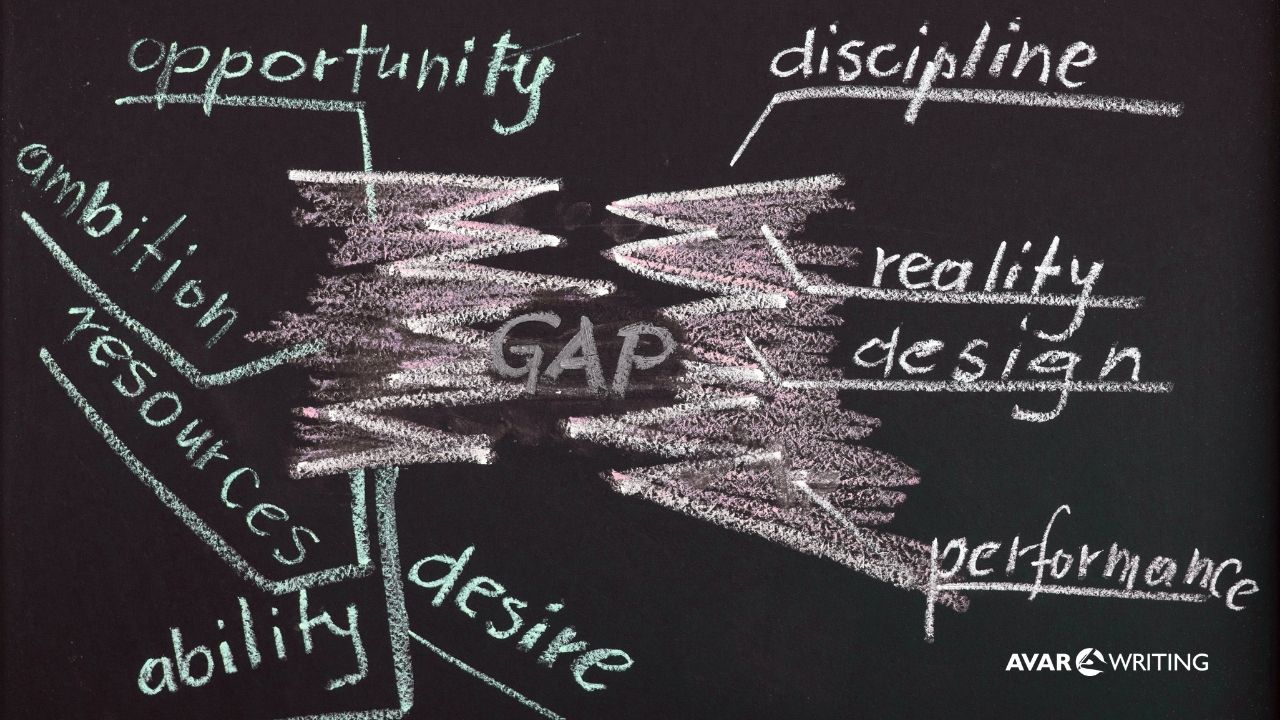
That gap, between what high school English actually teaches and what university-level writing expects, is the Analytical Gap.
Why this affects STEM and IB students hardest
Math and science have something English usually does not: a visible, learnable process. Show the steps, and a student can reproduce them. Get the steps right, and the marks follow.
English rarely works that way in a typical classroom. Structure is taught. Analysis is assumed. Students are asked to interpret a text's deeper meaning without ever being shown how skilled readers actually do it.
For a student who is used to learning logical, step-by-step methodologies, the vague instruction “interpret and analyze” is disorienting. They are struggling because e their English teachers haven’t shown them the analytical process. , This is the exact profile we see most often: a student excelling in STEM, IB, AP, or Honours coursework, with an English mark that quietly sits several points lower than everything else. It is common enough that we see the same pattern across roughly 60% of the students who learn academic analysis and writing through our programs. It is not a coincidence, and it is not a reflection of their writing ability.
Why "read more" and "better structure" do not fix it
Two things parents are told to try rarely work.
More reading does not teach analysis. It might widen vocabulary, but itwill not teach a student where to insert a thesis-driven interpretation into a paragraph, or how to spot the persuasive techniques and cognitive biases running through a non-fiction text.
Better structure does not teach analysis either. A student can nail the "hamburger" format and still have nothing insightful inside it. Structure tells you where to place evidence. It does not tell you how to select the right evidence or how to interpret it.
Both are common substitutes for what is missing: a teachable, repeatable and logical process for analysis itself.
Closing the Analytical Gap with a proven process
This is the problem the Demonstrate, Mirror, Analyze Method, or D.M.A. Method, was built to solve. Each class, the teacher demonstrates strong analysis and writing in real-time. Students then mirror that process in their own writing, working through the same steps for themselves, with very specific feedback along the way that shows them the exact logic they need to follow and motivates them focus and write, so they build analytical skills.
It is the same objective process families already trust in math and science, applied to English. Not vibes about "finding your voice” but a visible method that teenscan point to and repeat.
Where to start
If your child's English mark is the one number on the report card that does not match the rest, that is worth a closer look before it becomes a bigger problem in grade 11 or 12, when AP exams, IB finals, and university applications raise the stakes.
A Student Success Assessment Call is a complimentary, no-pressure conversation to look at where your child's writing and analytical skills currently stand, and whether closing the Analytical Gap now would make a real difference.
Share
Recent Posts

August 27, 2026
3 Writing Myths Parents Believe (And Why They’re Wrong)
Most parents trying to help a struggling English student reach for the same three fixes. These “fixes” keep teens stuck and they do...
August 25, 2026
The Analytical Gap: Why Smart Kids Get Stuck in English
Is your teen’s hard work in their STEM, IB or AP Math and Science courses being rewarded with top marks? Something is missing...